| |
| Monday, 12 October 2026 |
| Gustav Klimt |
| Lucrezia Walker |
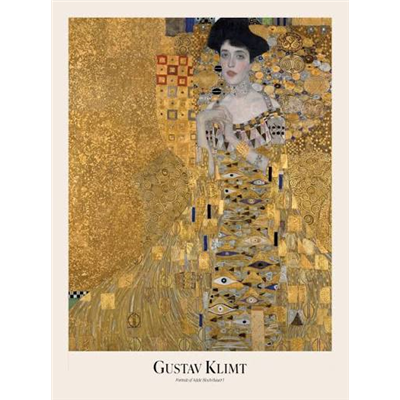 |
A successful Viennese painter of architectural decorations in a conventional manner, Klimt's later more personal style was criticized as pornographic. He subsequently accepted no more public commissions, but achieved a new success with the paintings of his 'golden phase, The Kiss being perhaps his most famous. His work encapsulates turn of the century Vienna at its distinctive artistic peak. Lucrezia Walker is a regular lecturer at the National Gallery. She is adjunct professor of art history for the University of North Carolina's Study Abroad semesters in London. She was Lay Canon for the Visual Arts at St Paul's Cathedral 2010-2014. |
|
| Monday, 09 November 2026 |
| Edouard Manet and Music |
| Lois Oliver |
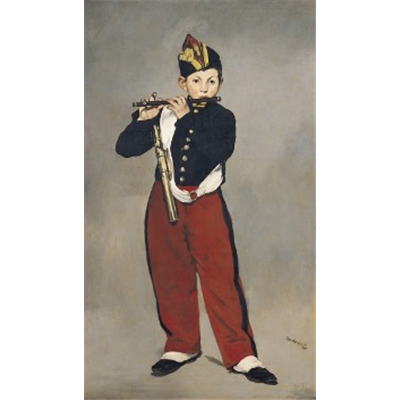 |
Music was a constant theme in Edouard Manet’s life and art. His wife Suzanne Leenhoff was a gifted pianist, and regular musical soirées were held at the Manet family home. His pictures of musicians and their audiences range from major early canvases depicting itinerant gypsy musicians and Spanish dancers, through to paintings encompassing the full range of Parisian musical culture, from private performances to street entertainment, café concerts and the Paris Opera. Manet also designed cover illustrations for music composed by his friends. Dr Lois Oliver is Professor in History of Art at the University of Notre Dame in London, and a Visiting Lecturer at the Courtauld Institute. She has worked as a Curator at the V&A, the National Gallery, and the Royal Academy. Her recent exhibitions include ‘Berthe Morisot: Shaping Impressionism’ at Dulwich Picture Gallery and ‘Jock McFadyen: Tourist without a Guidebook’ for the Royal Academy. She has created audio and multimedia tours for many of the UK’s leading arts institutions and has appeared on BBC Radio and TV. Also a keen violinist, Lois plays regularly with Kensington Chamber Orchestra and the Endellion Festival Orchestra. Lois studied English Literature at Cambridge University, and History of Art at the Courtauld Institute, completing an MA in Venetian Renaissance Art and writing her PhD thesis on The Image of the Artist, Paris 1815-1855. |
|
| Monday, 14 December 2026 |
| A Festive Tale: The Story of Christmas Music |
| Raymond Holden |
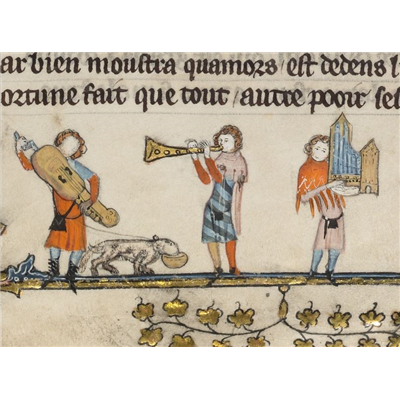 |
Christmas would not be Christmas without music. And the story of what we perform, listen to and share at that most festive of seasons is both fascinating and transformative. Having had its roots in Rome during the fourth century with chants like Veni redemptor gentium, Christmas music has since gone on to become one of mankind’s most enduring cultural and religious phenomena. Whether it is heard as part of the liturgy or at the cinema, Christmas music never fails to trigger a sense of wonderment. Using carefully chosen sound recordings and film clips, this lecture will trace the history and impact of Christmas music from its Roman roots to the present day. Born in Australia, Professor Raymond Holden AM studied at Sydney, Cologne and London and is both a critically acclaimed and a multi-award winning writer, conductor, broadcaster and lecturer. He has performed with the Philharmonia Orchestra, the Danish Radio Symphony Orchestra, the BBC Symphony Orchestra, the Orchestra of the Emilia Romagna and the New Symphony Orchestra of London, and has been published regularly by Oxford, Cambridge and Yale University Presses, the Royal Academy of Music Press, Hans Schneider Verlag (Vienna) and by ICA, EMI and Warner Classics. Professor Holden has appeared on BBC Television and Radio, Servus TV (Germany), RAI Television and Radio, ABC Classic FM, 3MBS FM, Vision Australia Radio, SRF (Switzerland) and Classic FM (South Africa), and has spoken at many of the world’s leading music and literary festivals, universities, conservatoires and research institutes. He was appointed a Member of the Order of Australia (AM) in the 2019 Queen’s Birthday Honours List and is currently Emeritus Professor of Music at the Royal Academy of Music, London. |
|
| Monday, 11 January 2027 |
| Architecture + Photography = Art |
| Brian Stater |
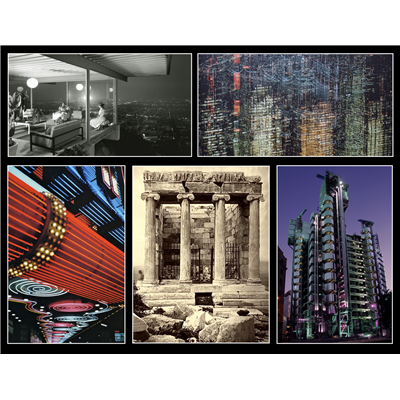 |
According to one leading architect, “the modern architectural drawing is interesting, the photograph is magnificent, the building is an unfortunate but necessary stage between the two.” Architecture + Photography = Art introduces photographers who crystallised the architects’ vision in images that are both works of art in their own right and shape our opinion of the buildings they depict. These photographers include Dell and Wainwright from Britain, Julius Shulman in the United States and Lucien Hervé in France. The lecture also examines photographers who recorded rural churches, barns and cottages to create a lyrical vision of Britain. Brian Stater has lifelong interests in both architecture and photography. He exhibited at the Royal Academy summer show in 2025 and lectured at the Bartlett School of Architecture for 25 years, retiring as a Senior Teaching Fellow. He has written on architecture for a wide range of publications. An exhibition of his own photographs was held at UCL and he is a former member of the Association of Historical and Fine Art Photography. Some of his work is with a pre-War Leica camera, as used by his great hero, Henri Cartier-Bresson, and many others. Brian is an engaging and amusing speaker who seeks to entertain as well as inform his audience. |
|
| Monday, 08 February 2027 |
| 'The Body as a Place': The Sculpture of Antony Gormley |
| Anna Moszynska |
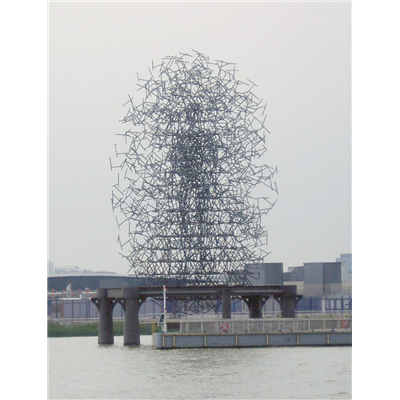 |
Antony Gormley is probably best well-known for his iconic ‘Angel of the North’, imposingly situated beside the A1 near Gateshead. However, this 20-metre high landmark sculpture is just one of a host of memorable pieces that he has created during the course of a prolific career that already spans over four decades. Having known Gormley since he was a student at the Slade and written two books on the artist’s drawings, I review the development of this major British sculptor from a unique perspective. In the context of his work overall, I examine his continuous fascination with the body as a place – both of experience and of interaction with its surroundings. Anna Moszynska is a London-based lecturer and writer specialising in contemporary art. During the 1990s, I oversaw the development of the subject as the first Master’s Degree at Sotheby’s Institute. I have also taught at other institutions in London including The City Lit, the Royal Academy and Tate, as well as lecturing in cities ranging from Dubai to New York and Berlin to Sydney. I continue to offer guest lectures on the Sotheby’s Institute MA in Contemporary Art. Apart from the many catalogue essays I have written on living artists, many of whom are women, my books include Abstract Art (1990, enlarged ed. 2020) and Sculpture Now (2013), both published by Thames & Hudson, and two books on the drawings of Antony Gormley, whose work I have curated at MACRO, the Museum of Contemporary Art in Rome. I enjoy introducing art to audiences in a lively and approachable way to make modern and contemporary art both accessible and interesting. |
|
| Monday, 08 March 2027 |
| Bottoms Up, the Story of Alcohol in Art |
| Ian Swankie |
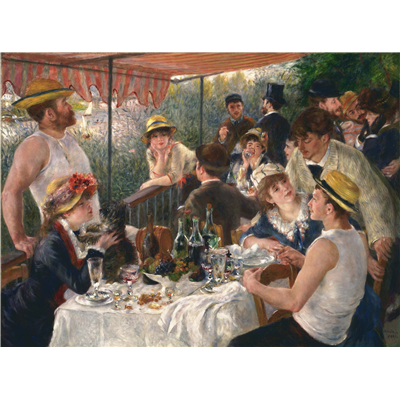 |
This is a talk about booze and intoxication in art. Since the early Romans and Greeks, alcohol has been an important subject for artists. We examine the way drink and drinking are depicted, the social messages portrayed, the happy and unhappy consequences, and how alcohol affected the lives of many artists, their families and friends. A Londoner with a contagious enthusiasm for art and architecture, Ian Swankie is an official guide at Tate Modern, Tate Britain, Guildhall Art Gallery and St Paul’s Cathedral. He is also a freelance London tour guide. Since 2012 he has led a popular weekly independent art lecture group in his home town of Richmond in West London. He is an Accredited Lecturer of The Arts Society and a Freeman of the Worshipful Company of Art Scholars, one of the City livery companies. |
|
| Monday, 10 May 2027 |
| Jackson Pollock - the Myth and the Reality |
| Colin Pink |
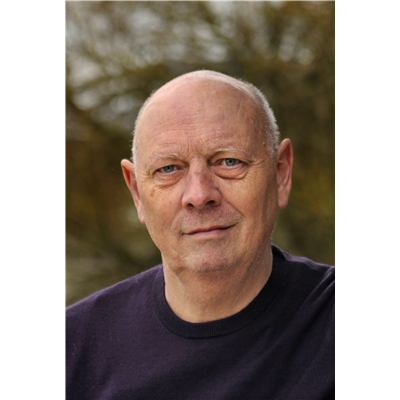 |
Jackson Pollock (1912-1956) is the most famous of the American Abstract Expressionist artists. His work defined a new era in the art world, after the Second World War, when the USA emerged as the leading centre for modern art. In this lecture we will examine the myth and reality of Jackson Pollock, the tortured man and artist, taking a detailed look at all phases of this fascinating artist’s work. Pollock was a sensitive soul and not the typical ‘macho’ artist he is often presented as. Colin Pink has a BA in Philosophy and Politics from the University of Southampton and a MA in the History of Art from Birkbeck, University of London. He specialises in twentieth century and contemporary art in Europe and North America. He lectures at Morley College London. He has also curated exhibitions of contemporary art and has published four books of poetry: Acrobats of Sound, 2016, The Ventriloquist Dummy’s Lament, 2019, Typicity, 2021 and Wreck of the Jeanne Gougy, 2021. |
|
| Monday, 14 June 2027 |
| London Bridged, 3500 Years of Crossing the Thames |
| Charlie Forman |
 |
Follow in the footsteps of the millions who have crossed the Thames over the last three millennia. People built a Thames crossing at Westminster in the Bronze Age—1,500 years before the Romans constructed London Bridge. In the 1,700 year wait for the next bridge, other crossings relied on watermen and horse ferries, as traffic got jammed up on London Bridge. The last 200 years have seen more than 50 new crossings over and under the river. Some are great feats of engineering; some are architecturally elegant. Every crossover changes the city’s genetic code. Even now newly designed bridges await their start on site. As a London walking tour guide and lecturer, Charlie Forman highlights the social, architectural and artistic history of my home city. It is a city I am passionate about, not least because it has a historic core larger and richer than any other world city. A member of the City of Westminster Guide Lecturers Association, my talks focus on the forces that have shaped and changed this multi-faceted metropolis and the artistic and cultural heritage that this has given us. After many hundreds of walks and a four-decade long career in housing and regeneration I have absorbed a deep understanding and appreciation of the capital. I’ve had some fascinating vantage points like the seven years build-up to the 2012 Olympic and Paralympic Games where I played a role in channelling potential long-term benefits into surrounding East London communities. My publications include Spitalfields: A battle for land. |
|
| Monday, 05 July 2027 |
| A Child of Six could do it! Cartoonists' Views of Modern Art |
| Barry Venning |
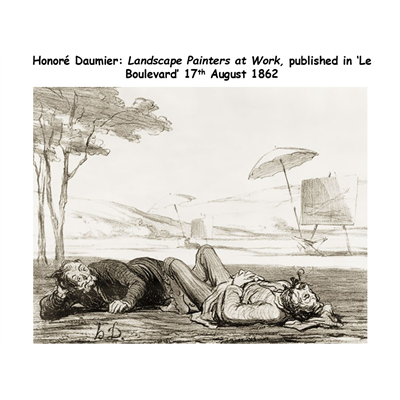 |
Modern art is often considered difficult, but it is much less so when seen through the eyes of some of the greatest cartoonists of the last one hundred and fifty years, who provide a humorous and sceptical but instructive guide to modern art from Courbet to the Britart of the 1990s. A chance to enjoy the insights and cartoons of (among others) Daumier, Larry, Thelwell, Matt, the wise guys at the New Yorker magazine and, of course, the immortal Giles. Collectively, they provide an absorbing, illuminating and, above all, a funny, revealing and sidelong view of 150 years of modern art. Barry Venning is an art historian whose interests and teaching range from the art of late medieval Europe to global contemporary art. He has published books, articles and exhibition catalogue essays on Turner, Constable and European landscape painting, but also has an ongoing research interest in postcolonial art and British visual satire. He works as a consultant and associate lecturer for the Open University. His media work includes two BBC TV documentaries, radio appearances for BBC local radio and abc Australia, and a DVD on Turner for the Tate. |
|